ATA Virtual Online Workshops
ATA strives to provide opportunities for all levels of tapestry weavers. We recognize the challenges that may exist in taking an in-person class including the cost of travel, time away from work or other obligations, and different learning styles which may require smaller bite-sized pieces of information taken in over a shorter duration of instruction. With so many valuable resources, including knowledgeable and experienced teachers, ATA has created a mini-online workshop model to help weavers pick up specific skills that will enhance their studio practice and future learning experiences. We currently do not have a set calendar of workshops available as this program is new. However, if you are interested in learning a specific technique, would like to work with a specific tapestry weaver, or are a teaching artist, please email education(at) americantapestryalliance.org and let us know!
H.V. with David van Buskirk
Saturday, July 26th, 2025, Noon to 3 pm Pacific
Sunday, July 27, 2025, 1 pm to 3 pm Pacific
Registration opens June 15, 2025 and is limited to 20 students (registration link is currently inactive and will open on 6/15)
Fee: $150 for Members; $200 for Non-Members
Workshop Description
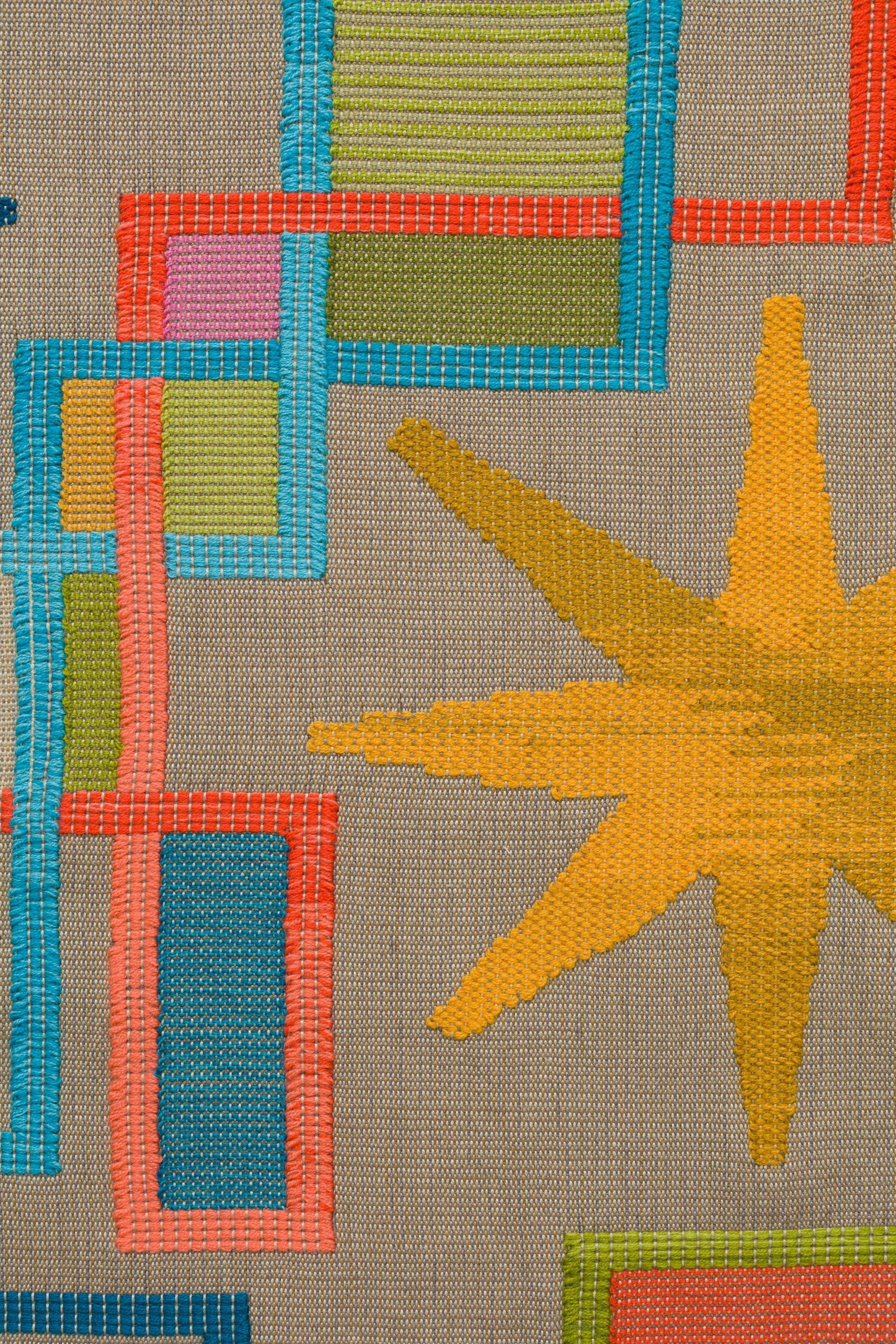
As much as you love tapestry weaving, admit it, haven’t there been times when you wished you could speed the process up? David van Buskirk will teach the next workshop on such a technique called H.V., or Handarbetets Vänner technique, and is a method of creating tapestries or other fabrics by using a series of different colored weft (horizontal) threads to form an image or pattern. H.V. is a simplified tapestry technique developed in 1903 at Handarbetes Vänners Vävskola (The Friends of Handwork’s Weave School) in Stockholm. The images are created by discontinuous weft inserted into a plain weave ground.
About David van Buskirk
For this course, you need to have a loom prepared to start weaving. A simple frame loom will do. I will use a rigid heddle loom for demonstrations. You can use a 4-harness floor or table loom. Three different techniques will be studied and practiced. Upon registering for the course, you will be provided with a list of warp, end counts, weave notes, and weft insertion suggestions. It is also recommended that you have a small sketch of flat shapes prepared to use for your practice piece.
David van Buskirk
Swedish Fugue, Detail
Previous Workshops
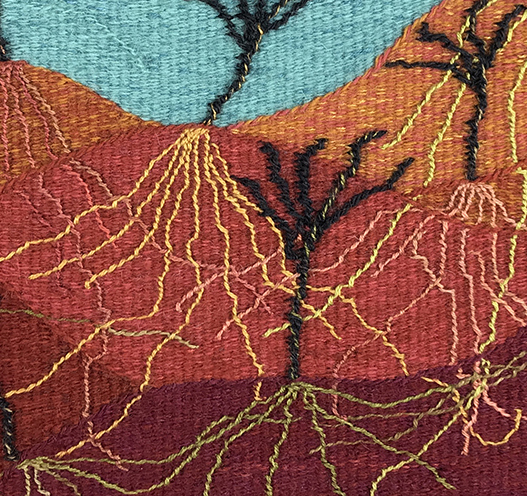
Soumak with Kennita Tully
March 25, 2025
Soumak with Kennita Tully was a 1-day workshop that began with Single Soumak – both closed and open techniques, along with a reverse form that creates little “dots” on the surface of the weave. Next, Vertical Soumak, a unique way to add fine vertical or diagonal lines on the surface of weaving, was introduced. A follow-up session included the opportunity to share work, insights, and questions.